
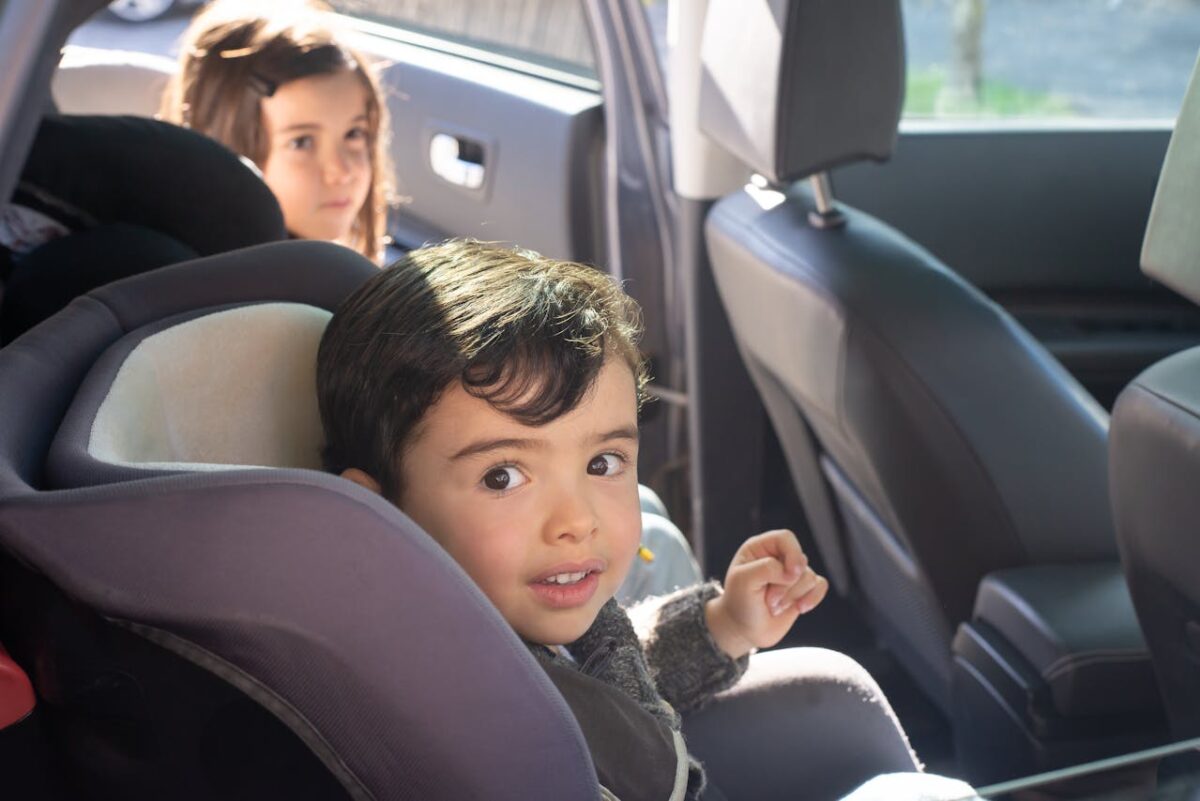
Many parents assume that once a child reaches the 4–5-year mark, it’s time to move on from a car seat. It feels like a natural milestone. But the reality is different. Switching to a booster seat too early can increase the risk of injury in a crash.
So when to switch to a booster seat is not about convenience or what other parents are doing. It comes down to one thing: whether your kid is truly ready from a safety perspective.
What a Booster Seat Is and When to Use It
To make the right decision, it’s important to understand what a booster seat is and when to use it.
A booster seat is not a traditional car seat. It does not have its own harness. Its role is to position your child so that the vehicle’s seat belt fits correctly and provides proper protection.
A correctly positioned belt should sit:
- across the shoulder, not the neck
- across the hips, not the stomach
- flat, without twisting or slack
If your child’s body is not ready, even a properly installed booster will not provide adequate protection.
When Can a Child Use a Booster Seat: Key Criteria
Parents often ask: when can a child use a booster seat safely?
Pediatricians and safety experts agree that readiness is not based on age alone. It depends on physical development and behavior.
Key guidelines include:
- height of at least 4 ft 9 in (145 cm)
- weight typically 40–50 lbs (18–22 kg), depending on the model
- ability to sit upright for the entire ride
- proper seat belt positioning without assistance
If your child:
- slouches
- leans forward
- places the belt under their arm
Then they are not ready for a booster seat.
Why Switching Too Early Increases Risk
This is a common situation: a kid feels “too big” for a car seat or wants to copy older kids. But early switching creates real safety risks.
The problem is simple: a standard vehicle seat belt is not designed for a smaller child’s body.
This can lead to:
- a higher risk of abdominal injuries
- increased pressure on the neck
- reduced side-impact protection
The solution is clear: follow booster seat safety recommendations, even if it means staying in the current restraint system longer.
Signs Your Child Is Not Ready
Watch for these signals during everyday rides:
- your child cannot maintain proper posture
- the belt crosses the neck instead of the shoulder
- knees do not bend naturally at the edge of the seat
- your kid frequently shifts position
If even one of these signs is present, your child is not ready to transition.
How to Make the Right Decision Without Guesswork
The safest approach is not to rely on assumptions.
At Sandy Springs Pediatrics, parents receive personalized guidance based on their child’s growth, behavior, and anatomy.
Experienced physicians, including Dr. Steven L. Shore, Dr. Estonna Wells-Jarrett, Dr. Vanna Jackson, Dr. Sarah Aldridge, Dr. Sarah Robertson, and Dr. Megan Fellows, evaluate each case individually.
This is not a general recommendation. It is a structured safety assessment focused on injury prevention and proper protection.
What Matters More: Faster or Safer
When it comes to child passenger safety, there is no real trade-off.
- Faster is more convenient.
- Safer is the right decision.
Parents who prioritize safety choose readiness over speed.
When to Talk to a Doctor
If you are unsure:
- whether a booster seat is appropriate for your child
- whether the seat belt fits correctly
- whether it is the right time to transition
It is better not to take risks.
Reach out to the specialists at Sandy Springs Pediatrics to get a clear, evidence-based answer.
The right time to switch is not a guess. It is a decision that affects your child’s safety on every ride.
Schedule a visit today to make sure your kid is truly ready for the next step.